Get Inspiration, Delivered.
Join our newsletter and get inspiring projects, educational resources, and other cool metal stuff, straight to your inbox.
Table of Contents
This is the third installation of our four-part series on copper and copper alloys. Read about the history of copper in part 1 and the finishes and patinas of copper in part 2.
The process of producing an eye-catching copper patina is an art. The techniques used to accomplish enigmatic colors are often considered trade secrets or proprietary processes.
Gained only through heavy experimentation, there are as many failures as successes in the patination process. Such a process requires chemical reactions on the copper surface to form colorful oxides, hydroxides, carbonates, sulfides, sulfates, nitrates, and chlorides.
One such patina, developed through a moment of inspiration and subsequent experimentation, is Dirty Penny™. Let’s explore its application on several architectural surfaces and discover the unique origin story of this singular patina.
“Kind of like…a Dirty Penny!”
The initial idea of Dirty Penny can be traced back to an artist studio where Bill Zahner met with renowned American architect Antoine Predock in the early 90s. They were discussing a custom facade for the University of Wyoming.
Predock wanted a finish for large areas that could offer an attractive and natural-looking surface. Something that didn’t look too perfect or forced.
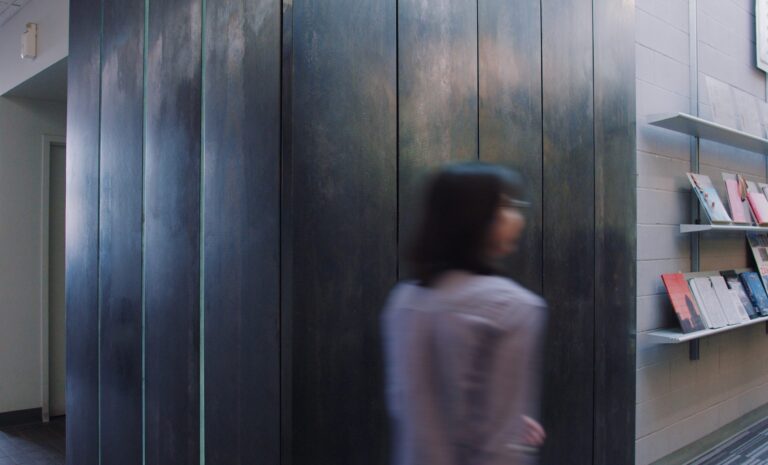
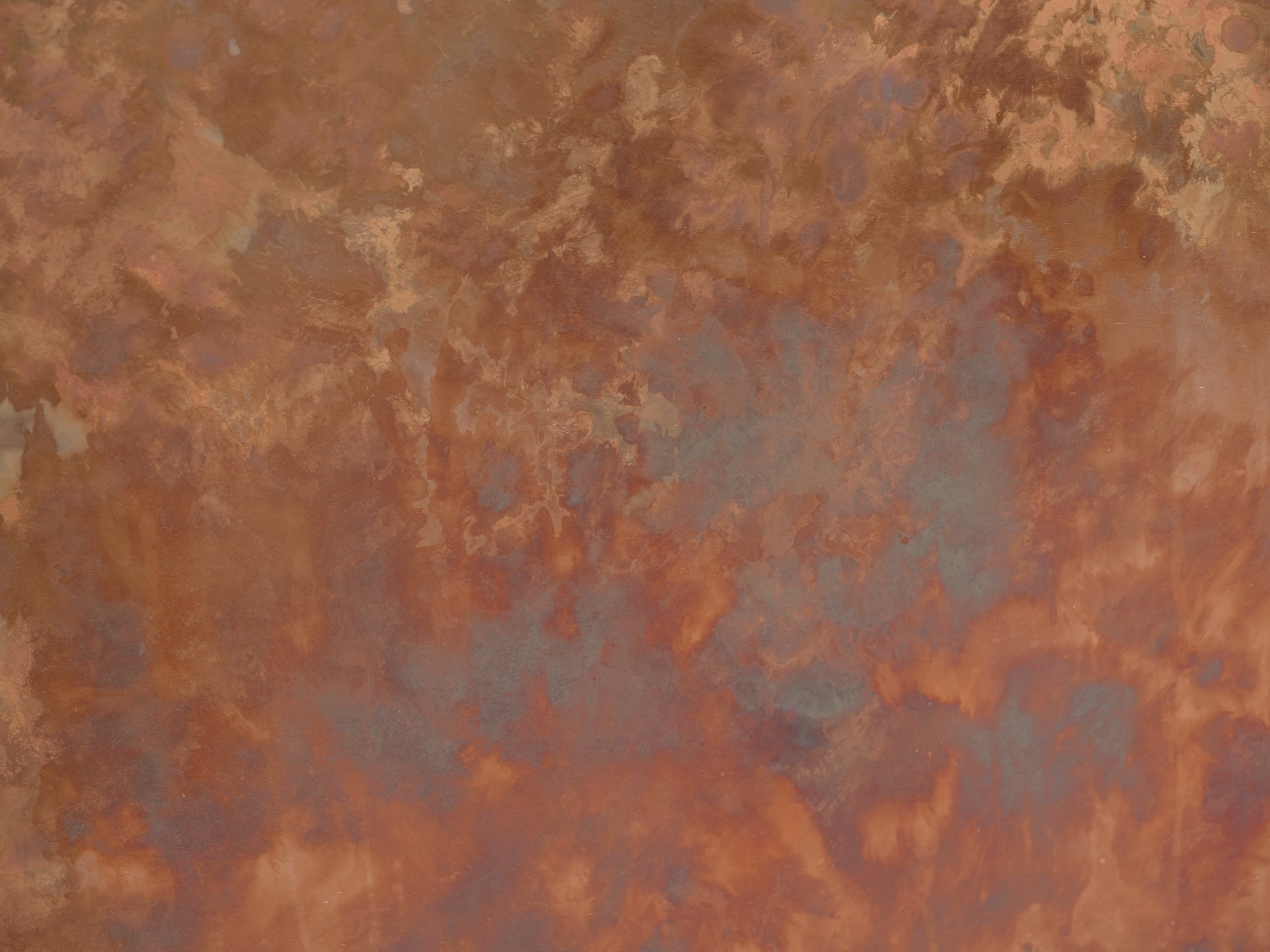
Predock’s wife, an artist, had produced a darkened copper surface in her studio. It was black, smudgy, and visually compelling. This experimental patina illustrated what Predock had in mind for the building’s exterior, but maybe a little lighter, he said, “kind of like…a dirty penny!”
He then pulled out an old penny with all the brown, smudgy detail to carry the point home. Thus, the Dirty Penny finish was “coined.” With the vision realized, the process of patina experimentation could begin. Zahner leaned into this concept and enjoyed evolving the surface to include a unique iridescence level.
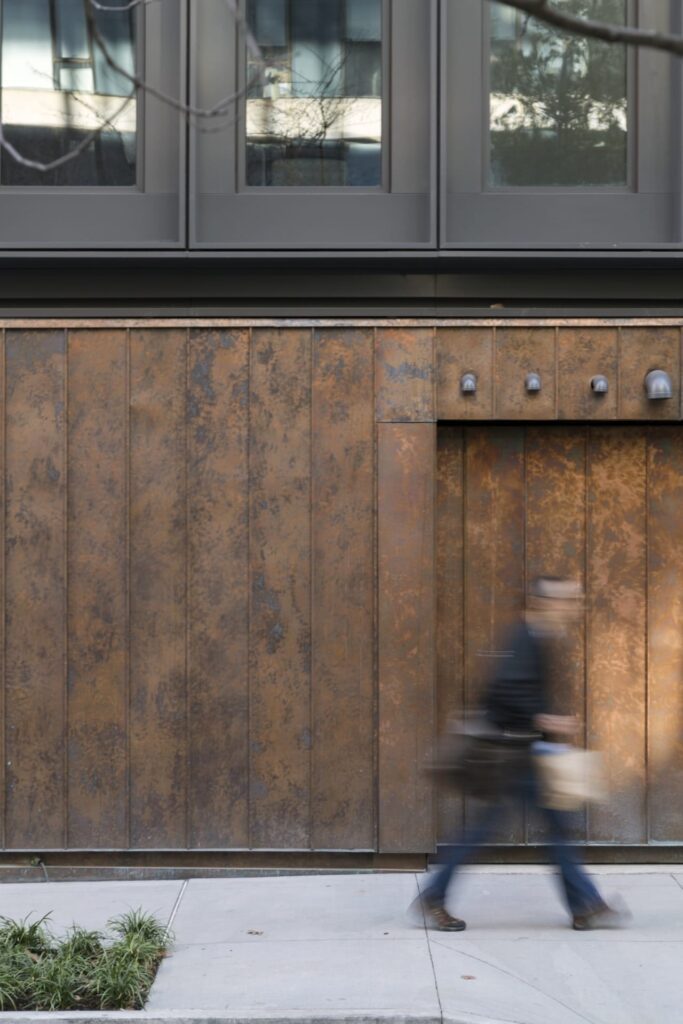
PHOTO © A. ZAHNER COMPANY.
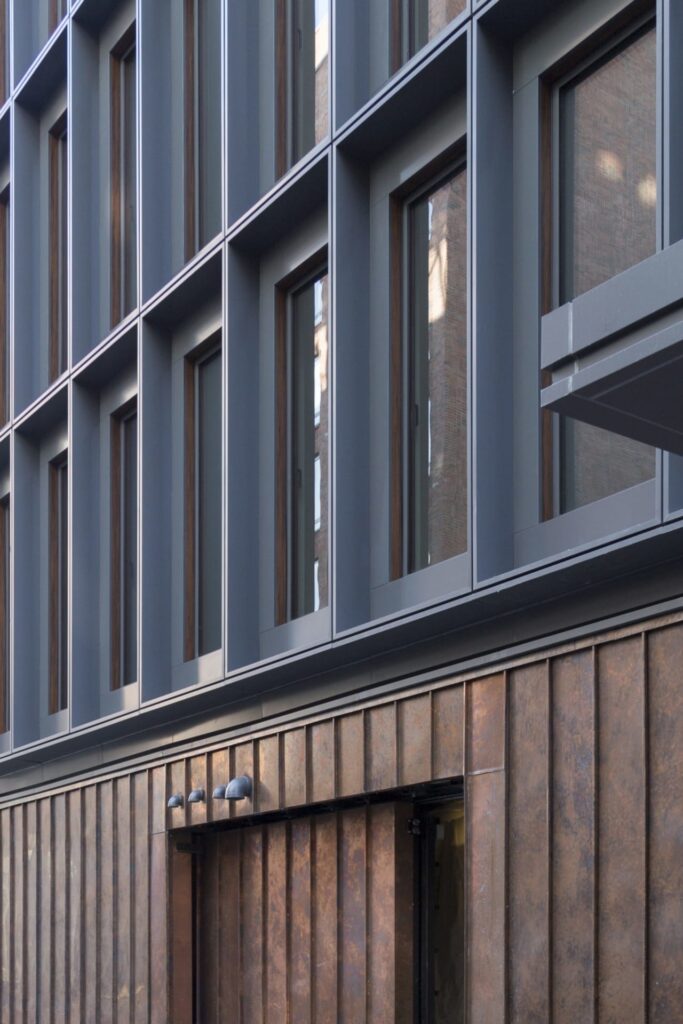
PHOTO © A. ZAHNER COMPANY..
Dirty Penny Characteristics and Applications
Well suited for exterior and interior surfaces, Dirty Penny is applied to copper or alloys of copper with high copper content. Creating this patina is similar to creating a red patina and is most often used for copper alloy tabletops, ceilings, and wall panels.
The rich array of colors that emerge from the reddish brown surface (a positive consequence of the cuprous oxide) range from orange to yellow, and even darker hues of purple. These tones are all mottled together and initially have a slight iridescence.
This light interference is possible because the finish is applied unevenly. The glow of the copper shines through at varying degrees. However, the level of iridescence does not remain constant if left untreated. It will eventually darken out in exterior projects as the tonal refraction fades with thickening oxides.
The longer the exposure time to the atmosphere, the greater the bonds between the base metal and the oxide. You can see this phenomenon at 15 Renwick in New York City. At the three-year point, the Dirty Penny finish maintains its clouded contrast. However, the iridescence becomes slightly muted.
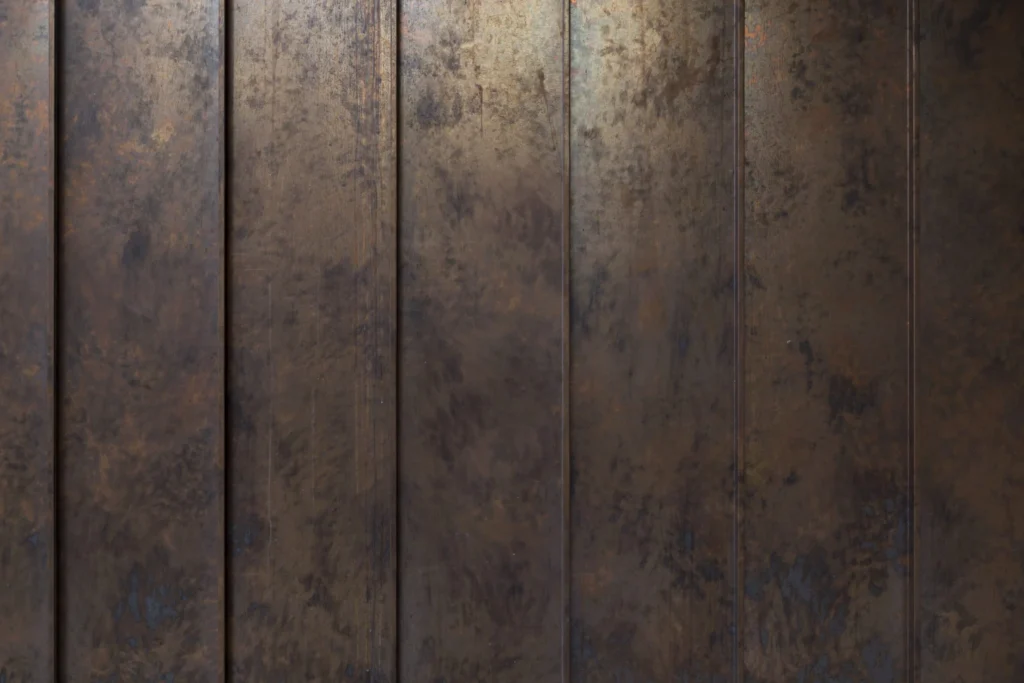
PHOTO © A. ZAHNER COMPANY.
Benefits Of Dirty Penny
Like a fine wine, Dirty Penny gets better with age. Over time, the copper darkens into rich reddish tones at different levels in a captivating display of natural alchemy. Thirty to forty years down the road, these tones will begin to blend.
The Dirty Penny finish applied on the exterior walls of the Daeyang Gallery has darkened, but you can still see the contrasting colors. If one wishes to preserve the differing tones long-term, a corrosion-inhibiting, weather-resistant clear coat may be applied after the patination process.
Copper patinas also enhance the durability of exterior surfaces. While all patinated copper holds up better outside, Dirty Penny holds up incredibly well. Exposed to the elements, this patina helps the copper ions resist their irresistible pull to join with the oxygen. By slowing this natural chemical process down significantly, the material corrosion occurs very slowly.
Dirty Penny for Interior Surfaces
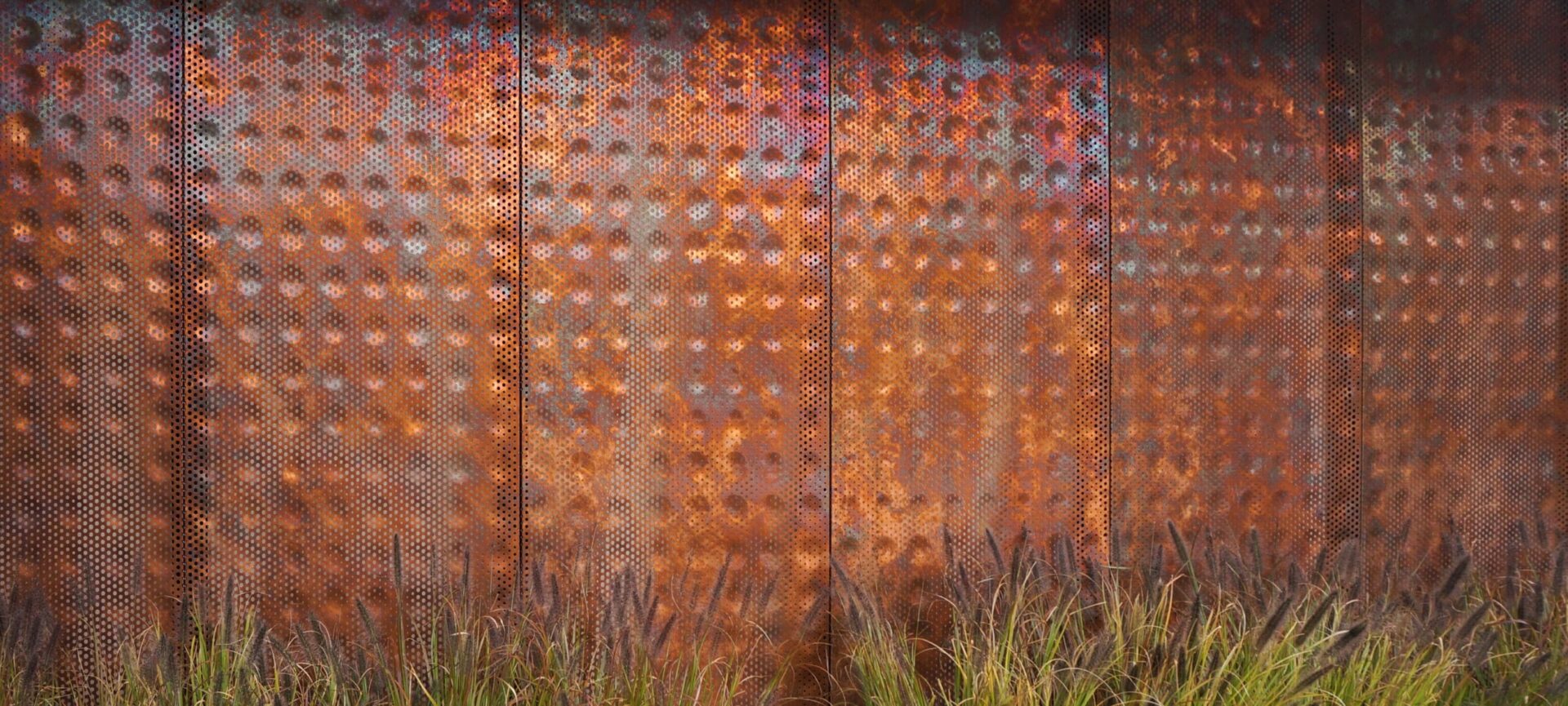
Dirty Penny is not restricted to the outdoors. Nor is it pigeonholed to smooth, uniform surfaces. Taking advantage of copper’s malleability, it can easily be perforated, bumped and embossed after finishing.

PHOTO © A. ZAHNER COMPANY.
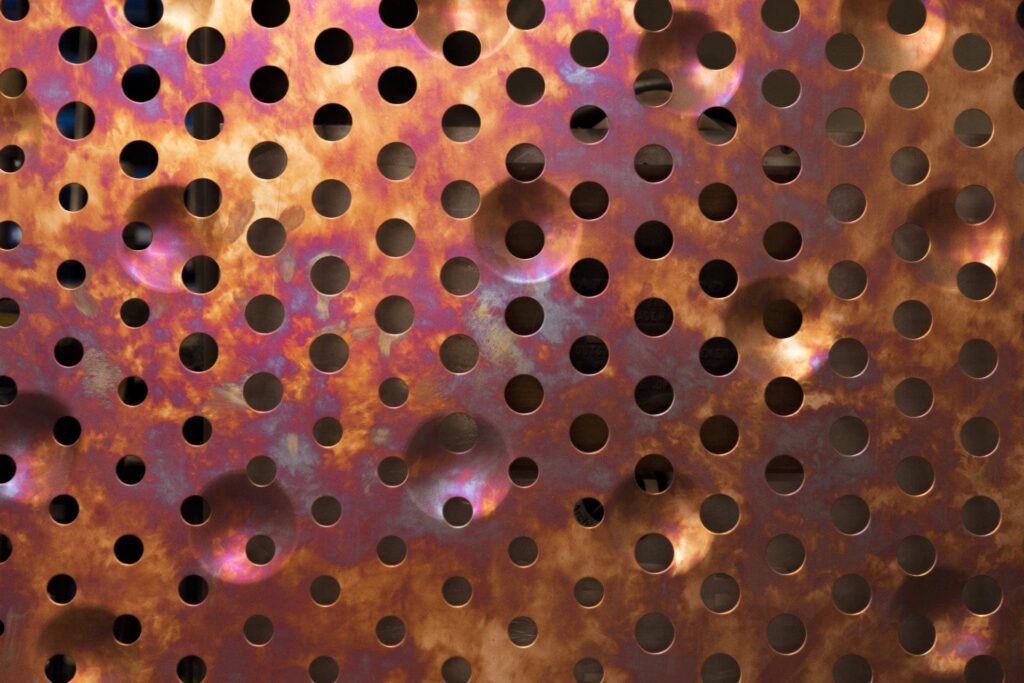
PHOTO © A. ZAHNER COMPANY.
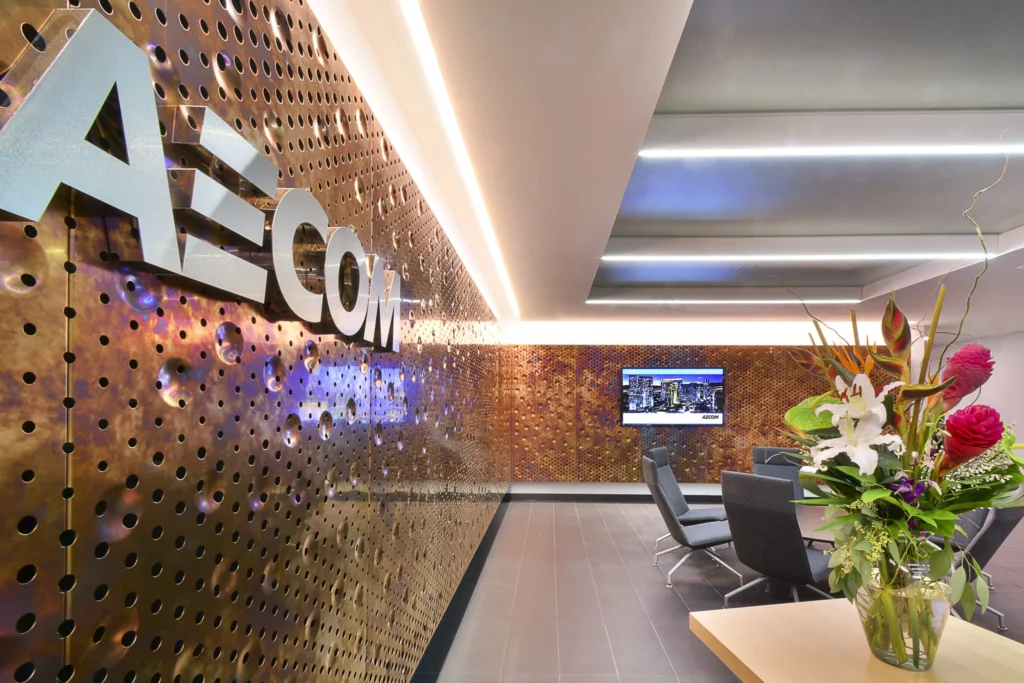
PHOTO COURTESY OF AECOM BUILDINGS AND PLACES.
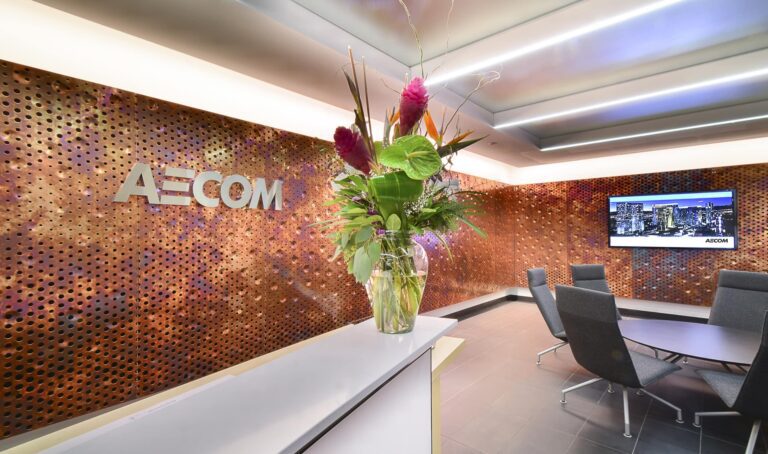
At the AECOM Office in Cleveland, a copper ImageWall® with the Dirty Penny surface was shaped by custom emboss/deboss punches. The iridescent shine, combined with such unique texture, created the rich yet contemporary interior environment desired.
Another advantage of most patinas is that they can layer. Intriguing effects result from combining various chemistries and applying the patina solutions in different waves. Some solutions react quickly with the copper alloy surface, while others take days.
Zahner collaborated with Hopi artist Ramona Sakiestewa to create a copper screen wall for The Native American Indian Museum at the Smithsonian in Washington D.C. Treatments were layered to produce the unique coloring, one being Dirty Penny.
The striking beauty of this copper material helps draw attention to the native heritage of the cultures who lived in the Northeast.
You can read more about coppers’ significance in early civilization in part 1 of this series.
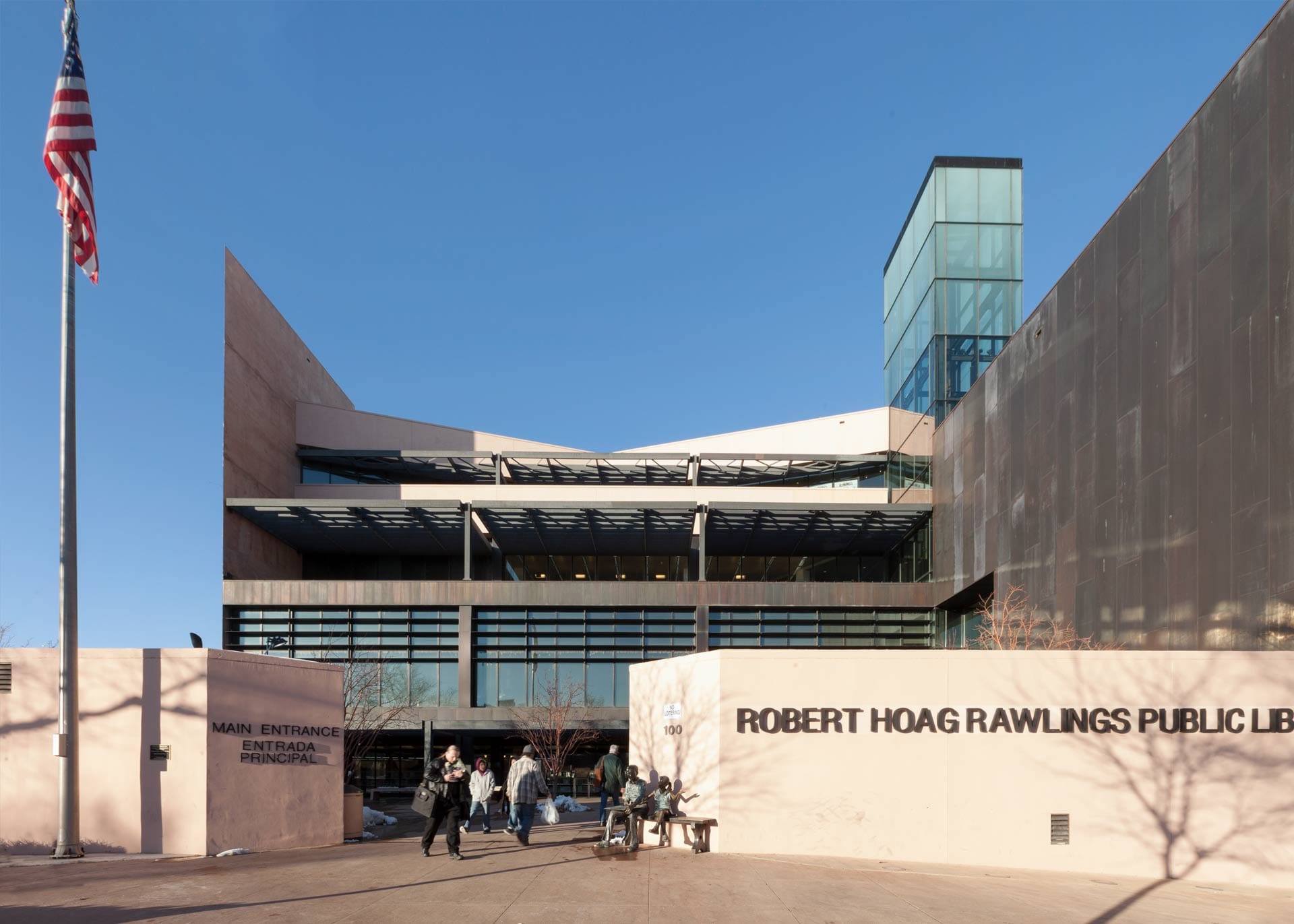
PHOTO © DANIEL HOLTON.
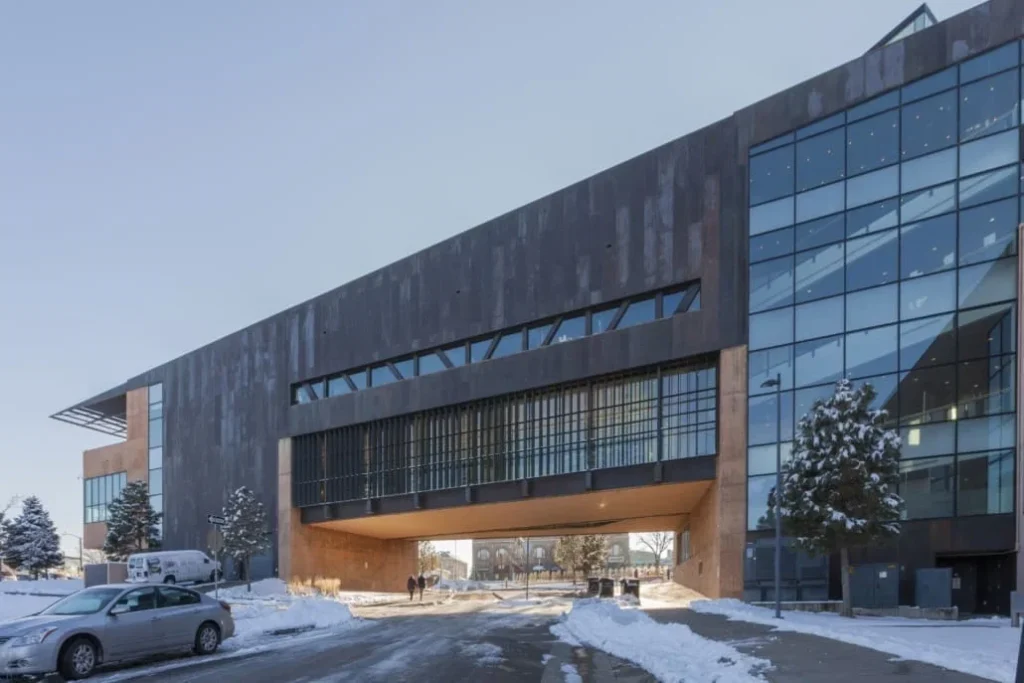
PHOTO © DANIEL HOLTON.
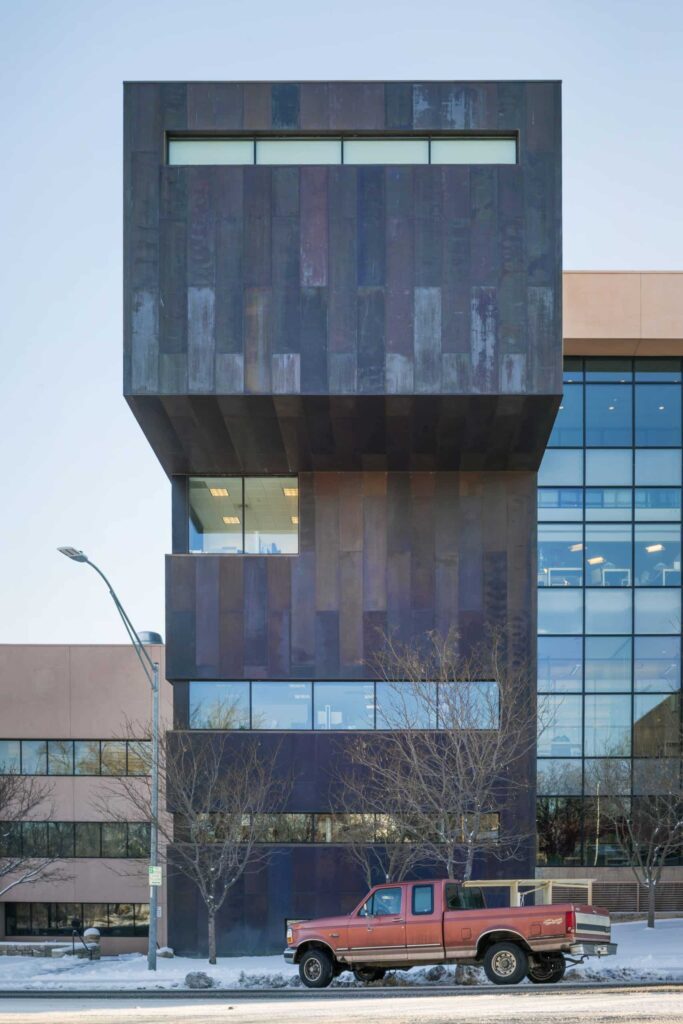
PHOTO © DANIEL HOLTON.
Dirty Penny In Zahner Projects
Well-received after its first debut at the University of Wyoming, Dirty Penny now appears on several significant architectural projects. Continuing his legacy in the application of Dirty Penny, Antoine Predock chose this finish for the facade of The Robert Hoag Rawlings Public Library in Pueblo, Colorado.
Collaborating with Zahner on the interior and exterior copper metalwork, the darkened Dirty Penny evokes the Colorado landscape. The library’s exterior blends into the background marvelously.
The recently renovated Festival of Arts in Laguna Beach is also clad in the Dirty Penny finish. Unlike a coating of paint or anodization, which will begin to deteriorate, this custom patina will strengthen as the surface oxidizes.
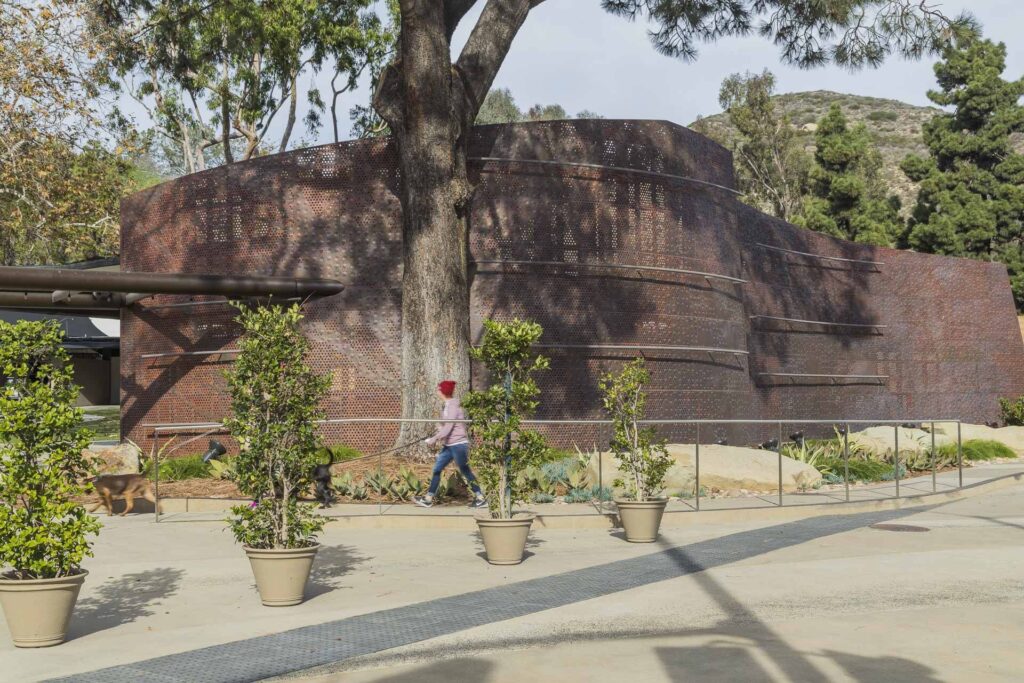
PHOTO © A. ZAHNER COMPANY.
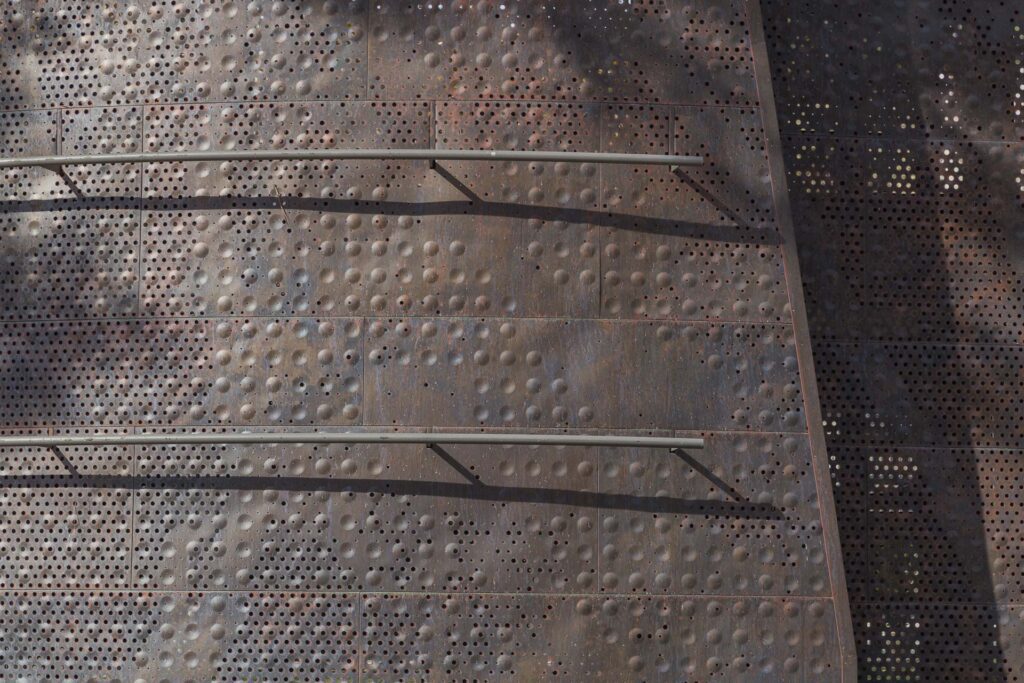
PHOTO © A. ZAHNER COMPANY.
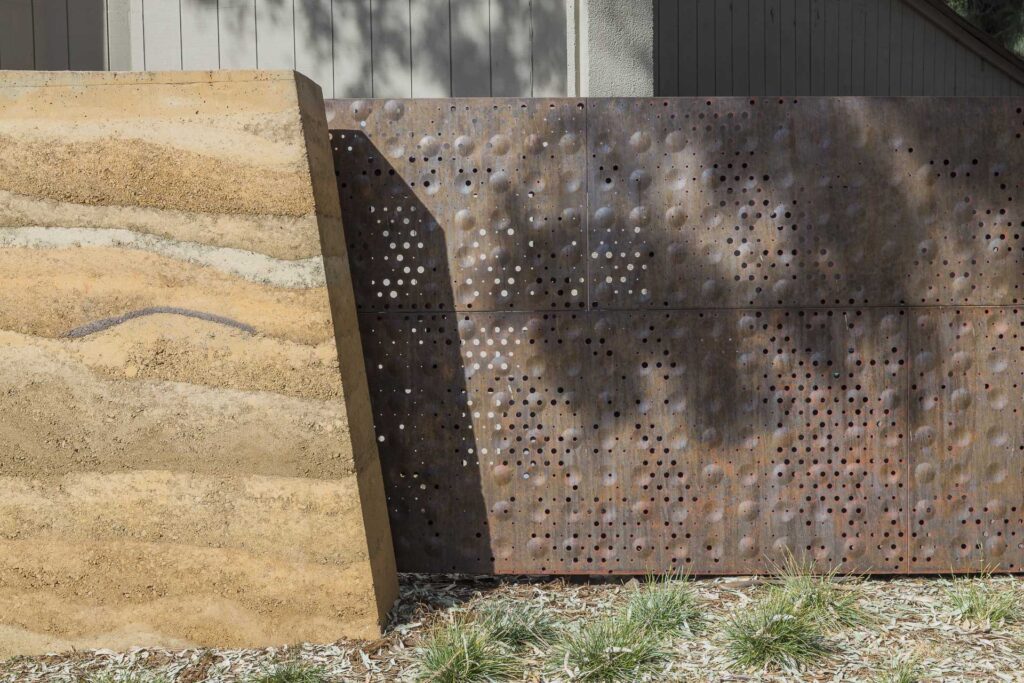
PHOTO © A. ZAHNER COMPANY.
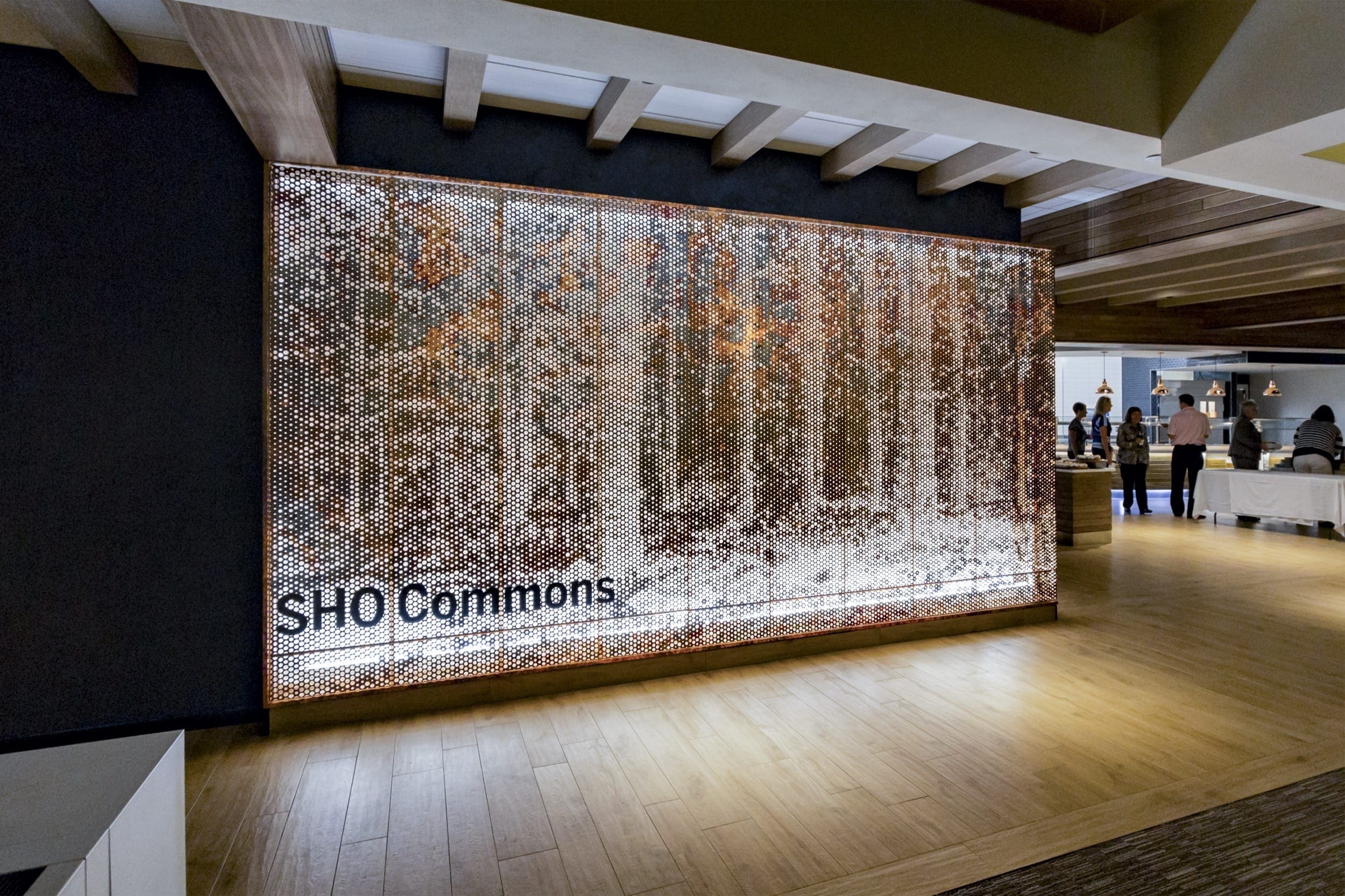
Keen on the words of philosopher Lucius Seneca, “All art is but an imitation of nature,” the architects sought an aged and natural appearance for the perforated copper wall. As a finish, Dirty Penny became the obvious choice.
More Examples of Dirty Penny in Zahner Projects
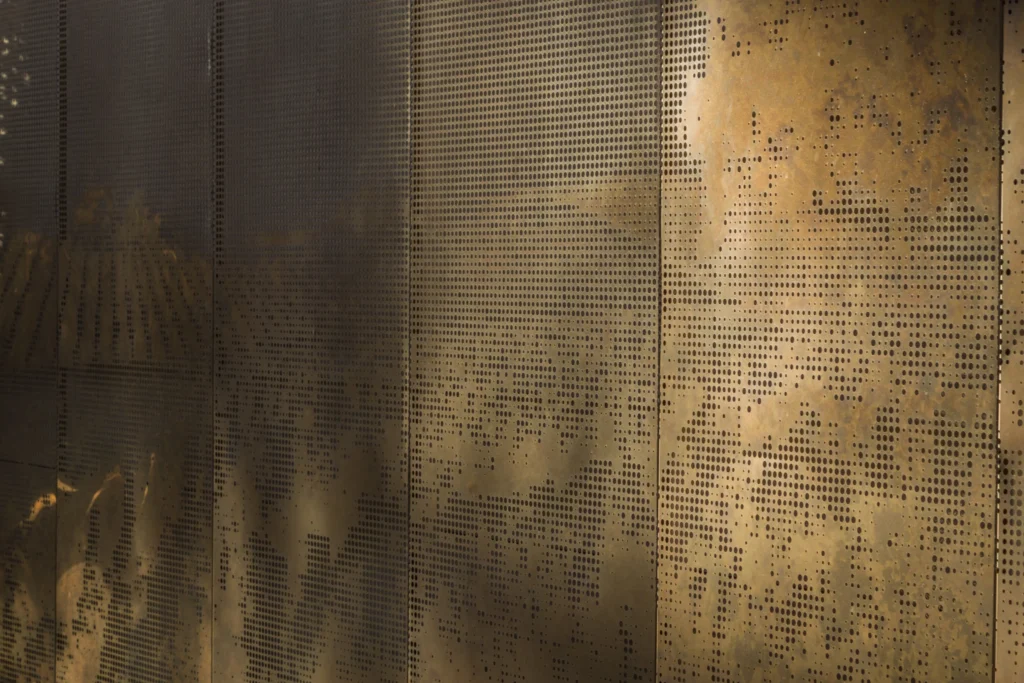
PHOTO © A. ZAHNER COMPANY.
Selection, Specification, and Sustainability
Dirty Penny is part of the copper collection within Zahner Surfaces, and is offered as a standard product in a variety of thicknesses ranging from 16 oz to 48 oz. Zahner can also work with specifiers for custom needs and can advise on thickness requirements for different applications.

Photo © A. Zahner Company
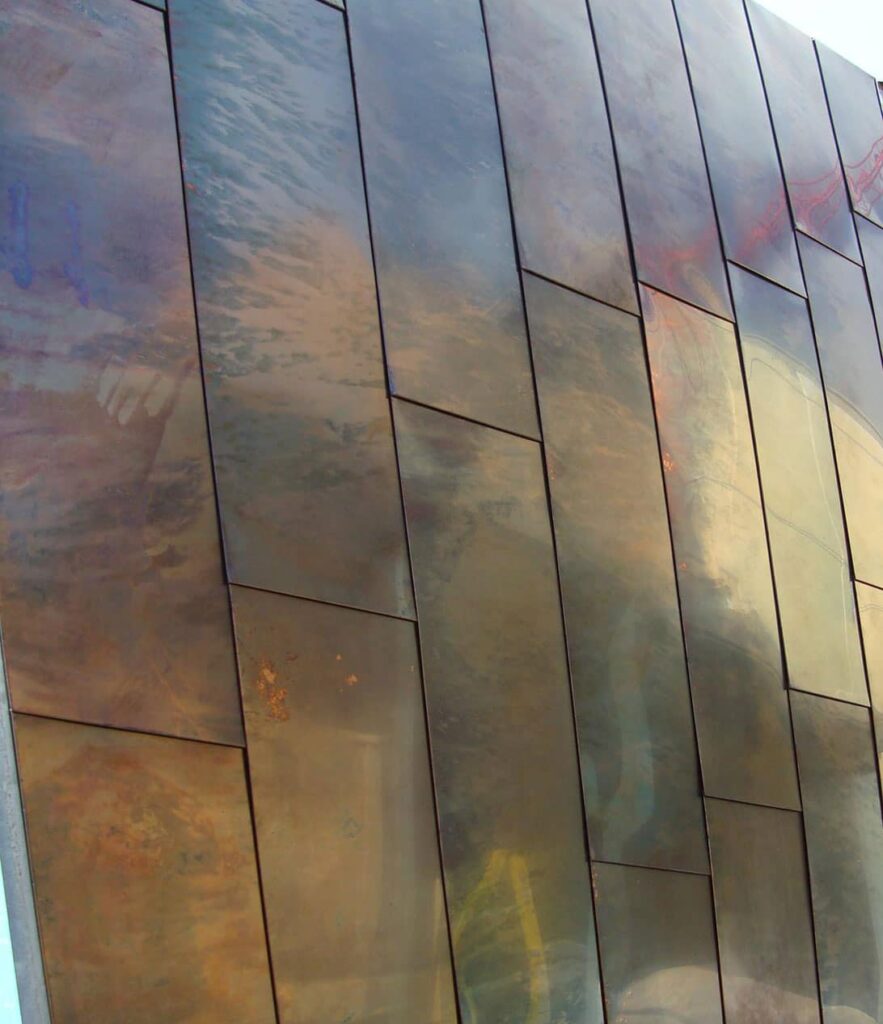
PHOTO © A. ZAHNER COMPANY.
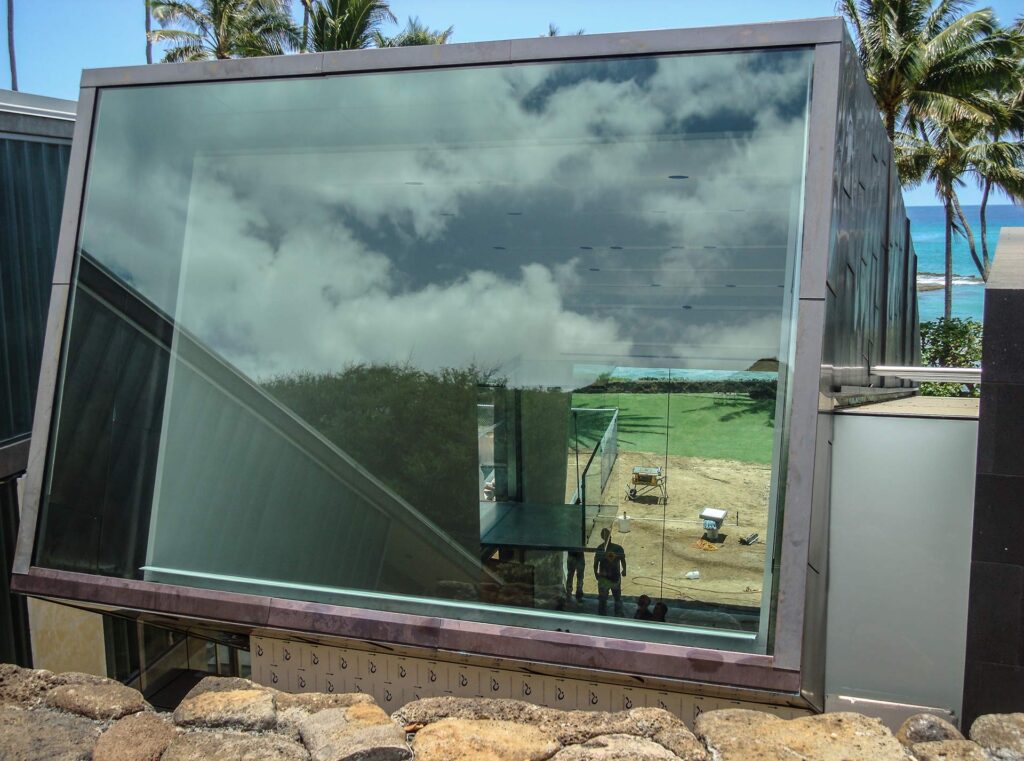
Photo © A. Zahner Company
When preparing the commercially pure copper surface for Dirty Penny, Zahner manufacturers get the surface impeccably clean. It must be free of all grease, oil, fingerprints, moisture, and other organic substances.
It also needs to be clean of all oxides. Copper alloys react rapidly with their surroundings, and any oxidation on the surface can render the alloy unreactive. For patinas to be effective, the surface must want to react with the chemistry of the new localized environment.
When working with patinas, exercise caution. The chemicals used in statuary finishes often contain mild acids or strong bases that can be hazardous to a person’s health and the environment. It is critical to work with companies that have established environmental procedures and follow safety protocols.
Keeping in step with Zahner’s sustainability mission, all of our metal patinas are developed in the company’s EPA-certified facility. Practicing clean operations at this award-winning facility ensures safe water waste disposal, preserving the integrity of the community water supply.
PHOTOGRAPHY BY SENTRY INSURANCE.
Take Advantage of Dirty Penny
Offering custom fabrication based on your unique project’s needs, we selectively partner with vendors offering the highest quality materials.
- Request Samples
- Learn more about Dirty Penny
- Read Bill Zahner’s Copper, Brass, and Bronze Surfaces: A Guide to Alloys, Finishes, Fabrication, and Maintenance in Architecture and Art
- Call us at +1 (816) 474-8882
- Contact a Project Specialist
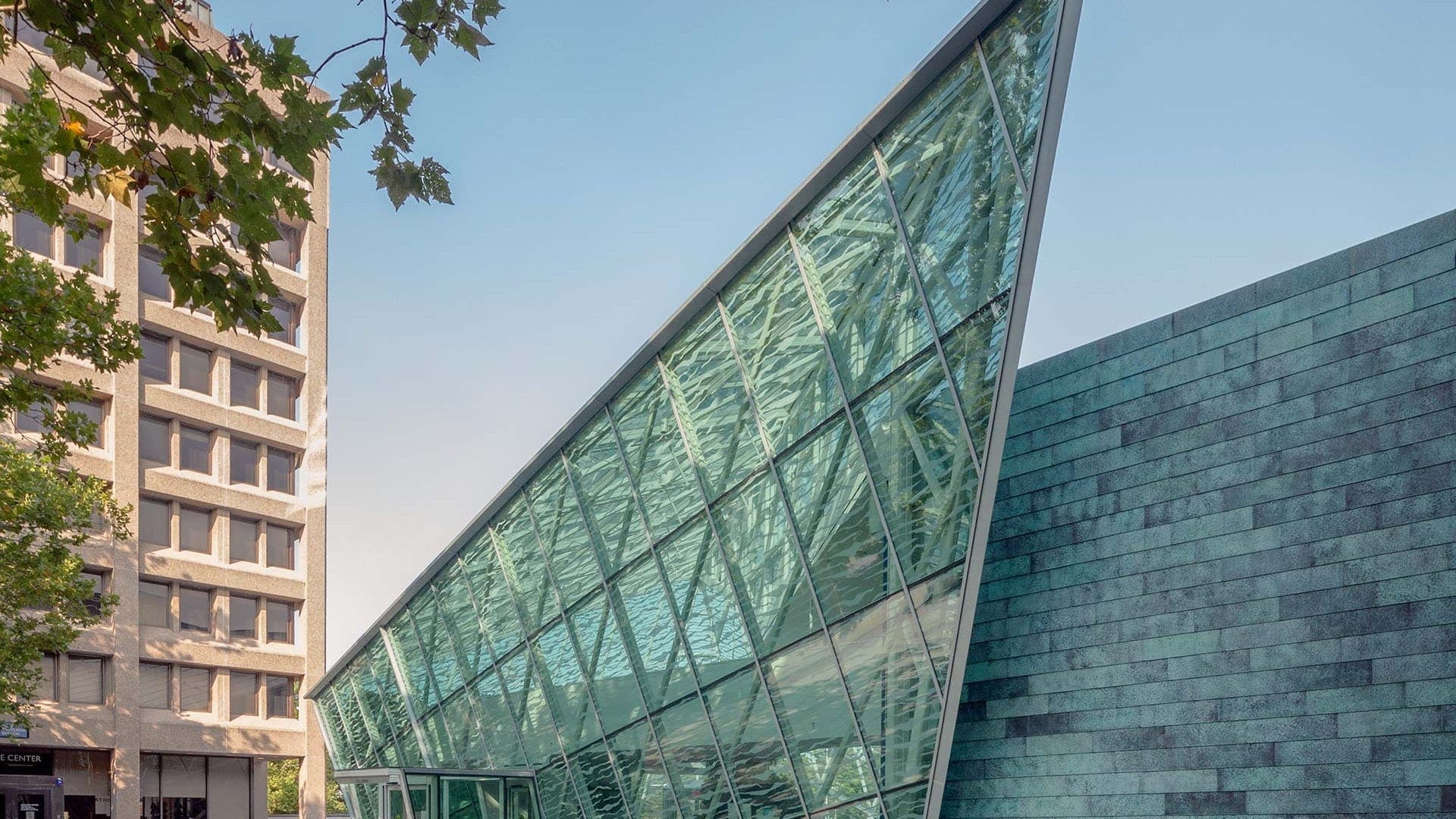
PHOTO © A. ZAHNER COMPANY.
NEXT: Star Blue™: Zahner’s Blue-Green Copper Patina With Intriguing Variation In Texture And Tone
In our next installment of this series, we’ll explore the preweathered copper surface that allows artists and architects to accomplish an aged copper look without the wait.
Read Part 4 in our series: Star Blue™: Zahner’s Blue-Green Copper Patina With Intriguing Variation In Texture And Tone—Coming Soon!