Celebrating the Extraordinary Life & Works of Frank Gehry (1929–2025)
By L. William Zahner
Frank Gehry’s passing marks the close of a remarkable chapter in architectural history, one defined by fearless experimentation and daring creativity.
For me, Frank was more than a global icon. He was a friend, collaborator, and a mentor whose imagination reshaped not only cities around the world, but also the way many of us think about architecture itself.
For nearly half a century, Frank was a source of inspiration. I had the rare opportunity to work with him on numerous projects throughout my career, and each collaboration challenged every assumption we held about materials, form, and process. Frank never accepted the familiar industry norms of the day. His relentless desire to create something entirely new pushed all of us to see further, think deeper, and work harder.

Mit Stata Center at Cambridge, Massachusetts
PHOTO © A. ZAHNER COMPANY.
Mit Stata Center at Cambridge, Massachusetts
PHOTO © A. ZAHNER COMPANY.Our shared exploration centered on architectural metal surfacing. My firm’s expertise was in sheet metal, but with Frank, those materials took on an entirely new life. Together, we explored thin cladding in ways no one had before: how light could reflect from surfaces and edges, how color could shift through interference-colored stainless steel, how titanium could bend, shimmer, and transform a building into sculpture.
Diffuse finishes, layered reflections, and unconventional textures became part of his architectural language. Frank embraced all of it, not for novelty’s sake, but in service of expanding what architecture could be. It was, quite simply, a blast.


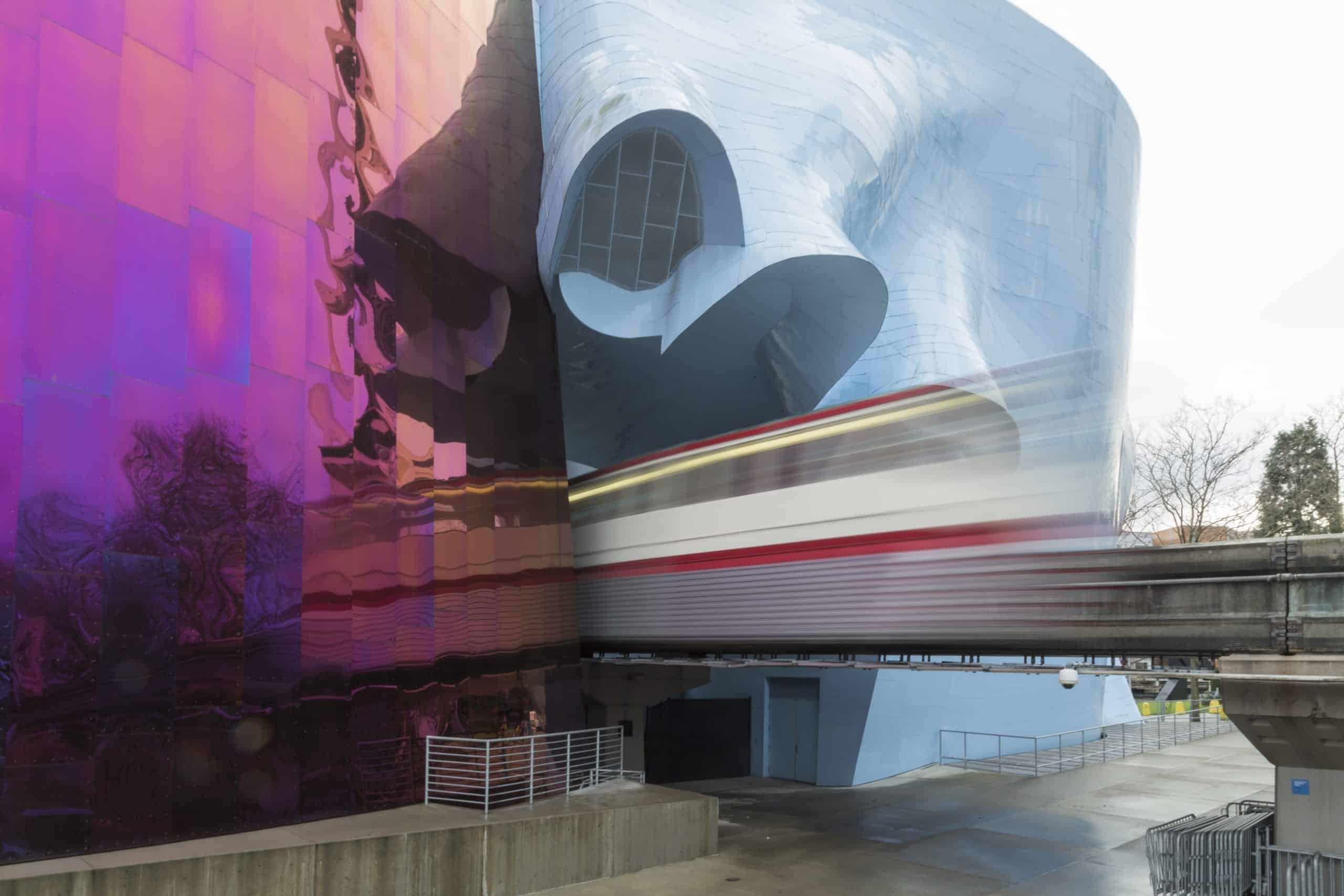
No two Gehry projects were ever alike. Some, like the Experience Music Project in Seattle, pushed us into entirely new territory, where generative design was brought from concept to reality. We had to invent new ways to define and fabricate surfaces while working on one of the most complex projects ever conceived. Even today, when I walk by that building, I still pause in disbelief that we actually pulled it off.

Experience Music Project (now the Museum of Pop Culture, or MoPOP)

Experience Music Project (now the Museum of Pop Culture, or MoPOP)
PHOTO © A. ZAHNER COMPANY.Other collaborations, including Bard College, the Jay Pritzker Pavilion, the Weatherhead School of Management at Case Western, and Team Disney Anaheim, each presented its own challenges and rewards.

Photograph of the setting sun on the Fisher Center at Bard College.
PHOTO © A. ZAHNER COMPANY.
PRITZKER PAVILION AT MILLENIUM PARK.
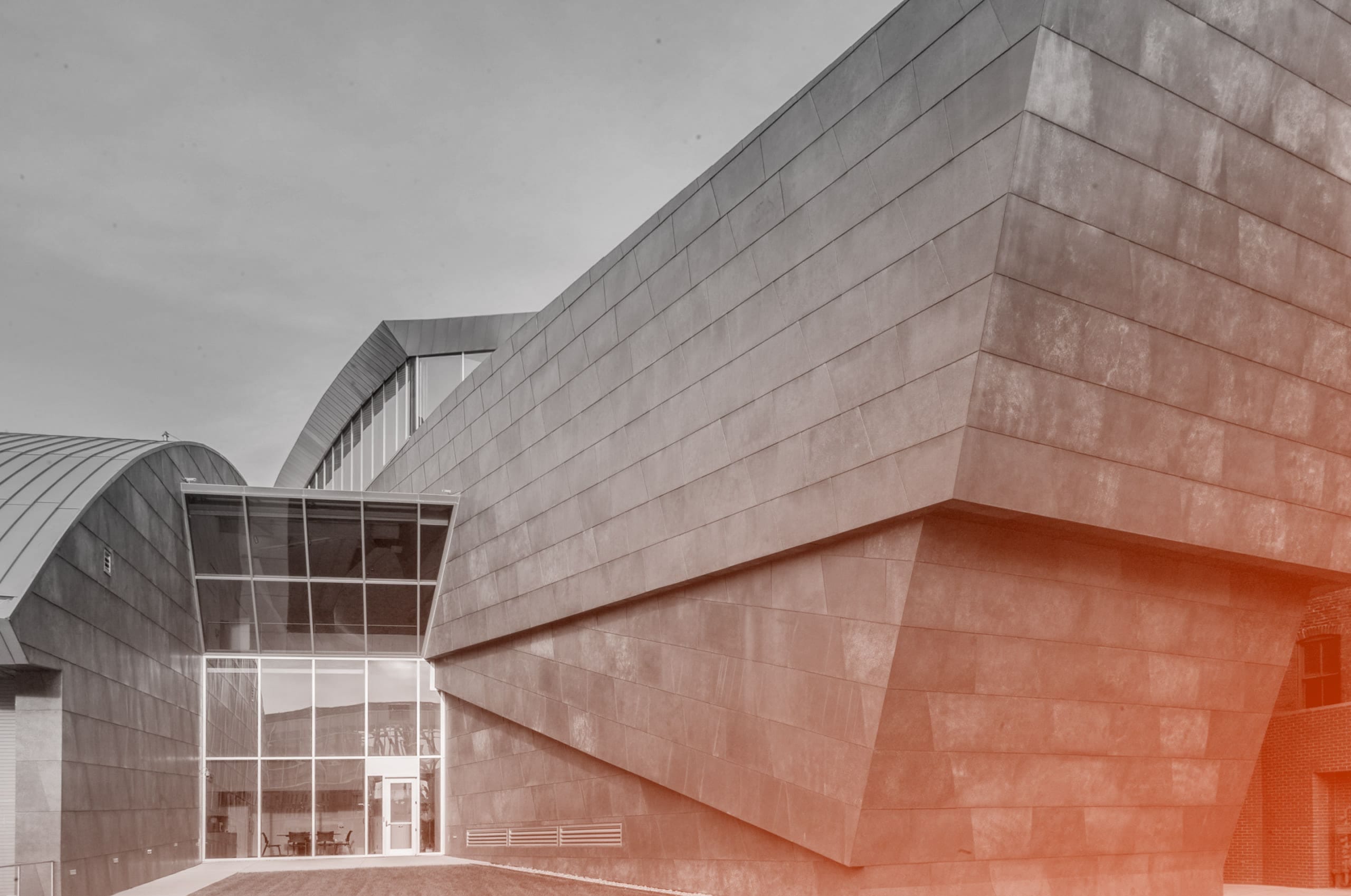
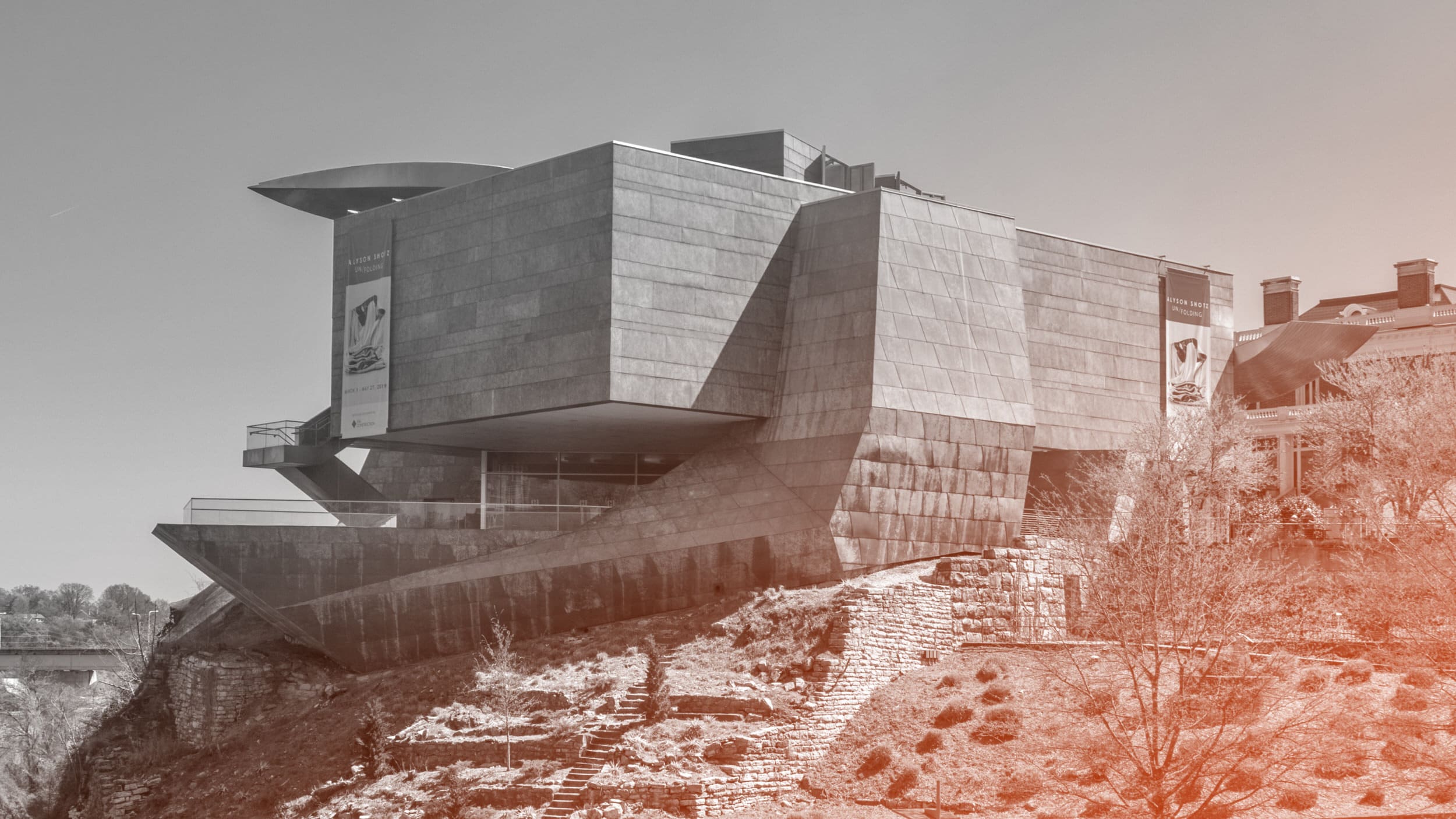
PHOTO © A. ZAHNER COMPANY.But one project that remains especially close to my heart is the OHR O’Keefe Museum in Biloxi. Set along the Mississippi shoreline, it honors the unconventional ceramic genius George Ohr, and its series of sculptural buildings reflects both the spirit of Ohr’s work and Frank’s fearless creativity.

OHR-O'KEEFE MUSEUM OF ART FEATURING ANGEL HAIR STAINLESS STEEL.
PHOTO © A. ZAHNER COMPANY.To realize these forms, we were often forced beyond conventional systems. Standard methods simply wouldn’t work. So we invented new ones, shaping curved architectural forms with modular components fabricated through highly defined, computer-driven manufacturing.
In many ways, these collaborations helped change the industry’s approach to building surfaces. Frank, along with the remarkable teams who worked with him, transformed not just what buildings look like, but how they are imagined and constructed.

OHR-O'KEEFE MUSEUM OF ART AT DUSK, DESIGNED BY FRANK GEHRY PARTNERS.
PHOTO © A. ZAHNER COMPANY.
OHR-O'KEEFE MUSEUM OF ART MAIN BUILDING AT DUSK, BILOXI, MISSISSIPPI.
PHOTO © A. ZAHNER COMPANY.Frank was kind enough to comment on our professional collaboration and also share his design philosophy on metal in a foreword he wrote for my first book in 2005, “Architectural Metal Surfaces.” It is a prized memento of our work together:
Foreword
Bill Zahner and I met in 1983 when he invited me to participate in a Sheet Metal Exhibition at the National Building Museum in Washington, D.C. I was happy to do so because at that time I was exploring the creative potential of sheet metal and was frustrated because there was so little attention paid to this craft and so little information available.
I designed a Tower of Babel for the exhibit, and since then Bill and I have been talking metal. I use it in almost all my buildings and, thanks to Bill’s expertise, I have been able to keep trying and testing new ideas. Apart from being economical, easy to maintain, and quick to construct, it offers endless artistic possibilities.
Metal is sculptural, allowing for free-form structures inconceivable in any other material. It interacts with light and reflected water in a magical way. Changing constantly with the weather, light bounces and shimmers and glides across metal’s iridescent surface in a way that is quite poetic. Some metals corrode in really interesting ways. Others maintain their jewel-like sheen over time.
Sheet metals come in different costs and quality. I have clad buildings in the simplest galvanized steel as well as the richer copper and aluminum, and now zinc and titanium. Each has its own beauty and place.
For me, metal is the material of our time. It enables architecture to become sculpture; it also expresses technology as well as the time-honored characteristics of quality and permanence.
I applaud Bill for shedding light on the art of metal in this excellent guide to architectural metals.
– Frank O. Gehry

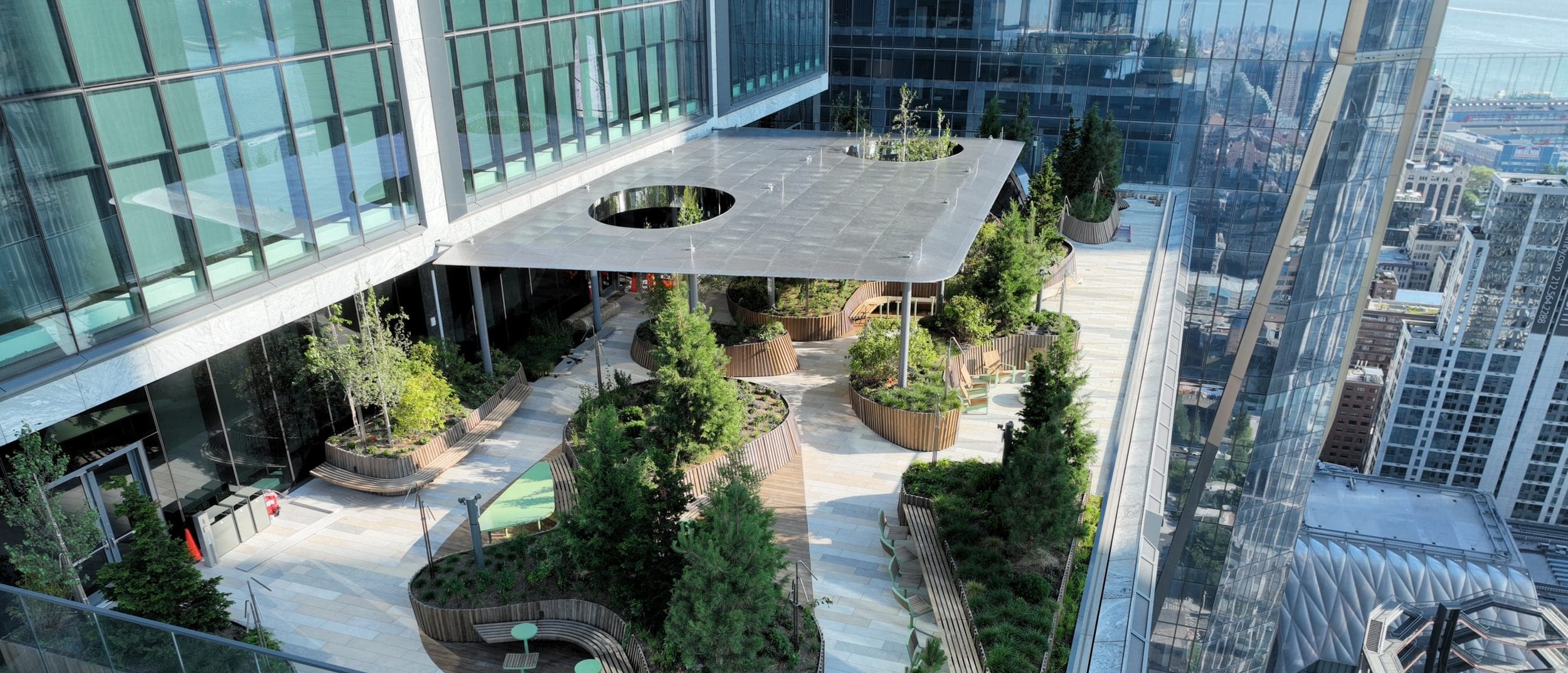
Guggenheim Canopy during its installation.

Guggenheim Canopy in NYC.
Frank’s influence on architecture will continue to be felt for generations. But for me, it is the conversations, the laughter, and the shared sense of discovery that will linger longest. I will always carry his inspiration with me.
He was truly one of the great architects of our time, and I will dearly miss his collaboration and friendship.


 PHOTO © A. ZAHNER COMPANY.

 PHOTO © A. ZAHNER COMPANY.

 Photo ©
 PHOTO ©️ Parrish Ruiz de Velasco (parrch.com)


 Ɱ, Creative Commons Attribution-Share Alike 4.0 International license, edited.
 PHOTO © A. ZAHNER COMPANY.