 Project Data
 Project Description
Oculus Sculpture, KCAI Competition
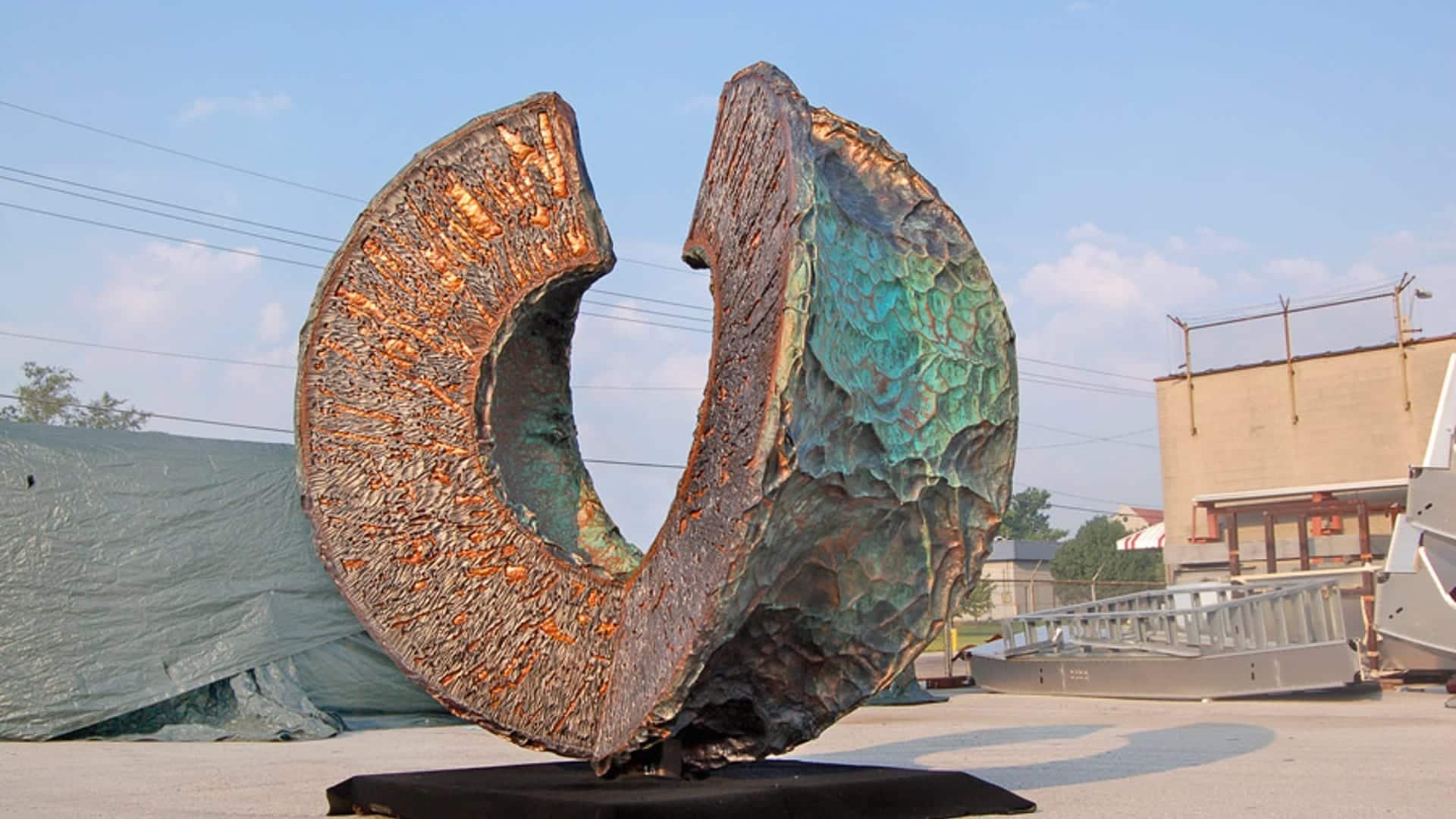
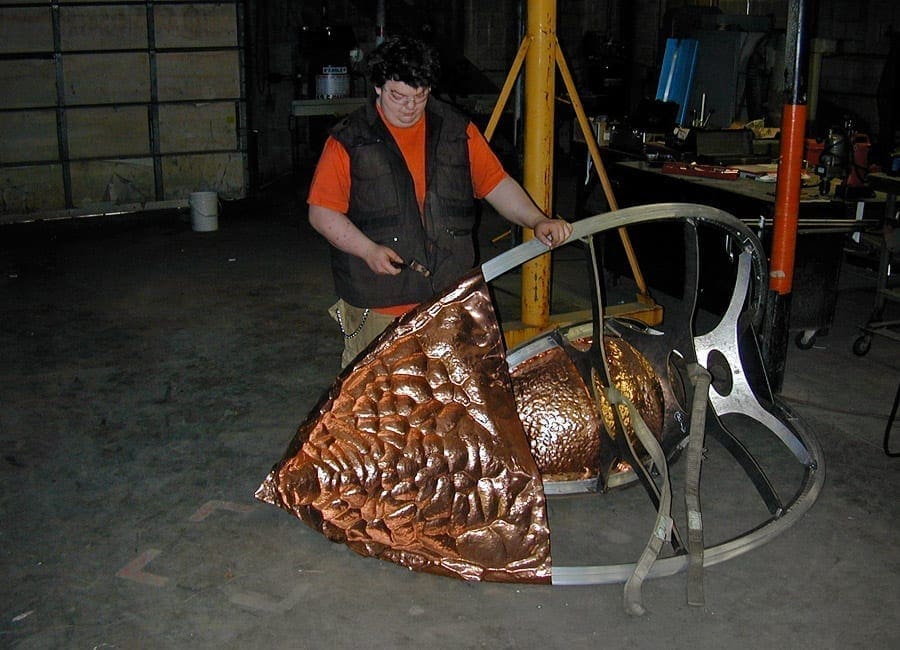
Every other year, Zahner produces one or more artworks in conjunction with the Kansas City Art Institute’s Biennial Auction for Student Scholarships. In the 2007 year, artist Reilly Hoffman won the competition with a sculpture entitled, ‘Oculus’. Zahner manufactured the base form in aluminum, and water jet cut the parts for the sculpture. Hoffman then crafted copper and steel with his signature torch-carving techniques.
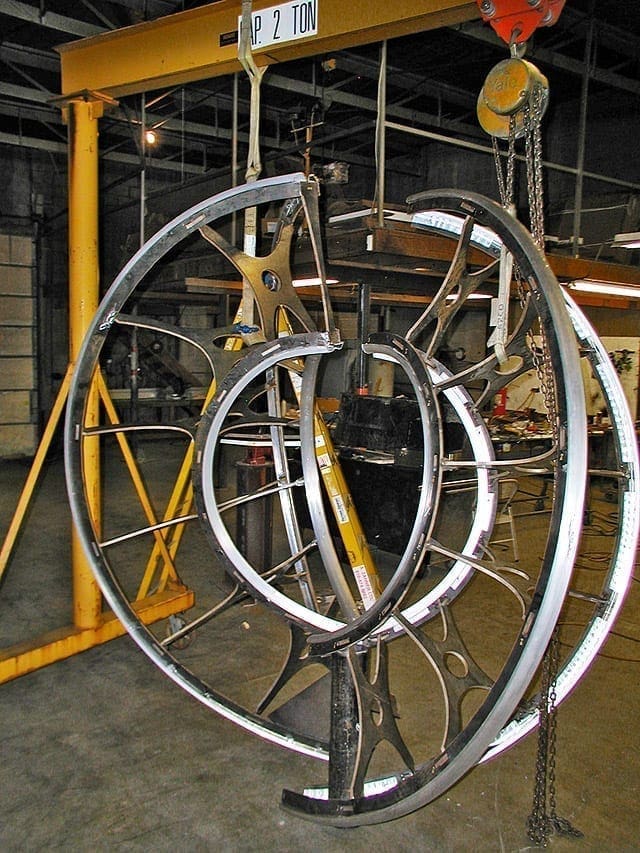
The design of the artwork is based on a smaller version of the artwork. The artwork’s concept is a sphere which has been cut into slices. Two of the slices are intertwined in a kiss. The sculpture’s exterior appearance is a rough steel, while its inner areas are clad in copper.
Although diminutive when compared to buildings, the sculpture is still quite large compared to the human scale. The large size required the use of a substructure to apply the metal surface.
To create the sculpture in its large form required making changes to the how the artwork is manufactured. Zahner engineers in the Design Assist team proposed using ZEPPS, the Zahner system developed for building curves. Using the this system enabled the team to make a light aluminum understructure to which the metal surface was attached.
This use of ZEPPS for manufacturing objects such as this one is somewhat atypical. The system is more commonly used to produce the large curved walls for uniquely shaped buildings. In situations where a rapid-installation process is required, or for installations at higher elevations, ZEPPS provides an efficient way to design, engineer, and install such unique forms.
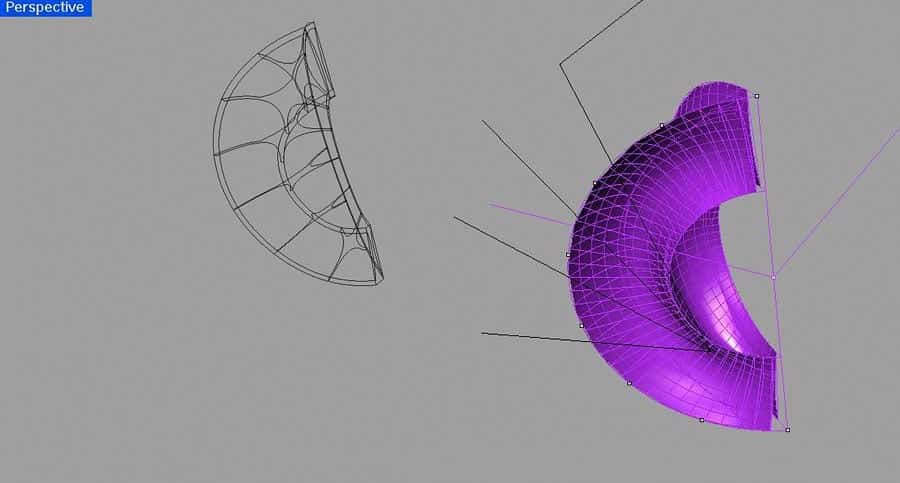
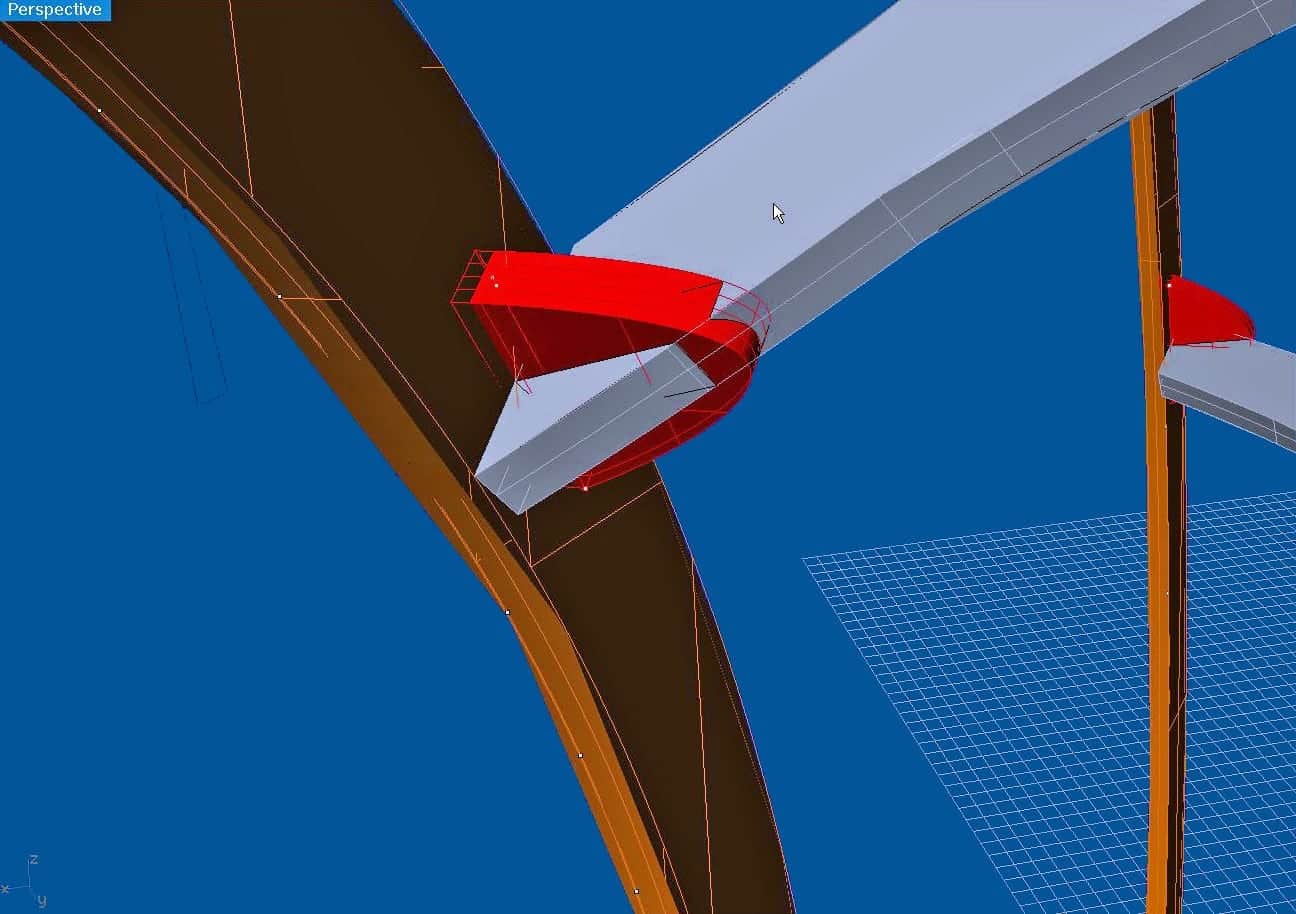
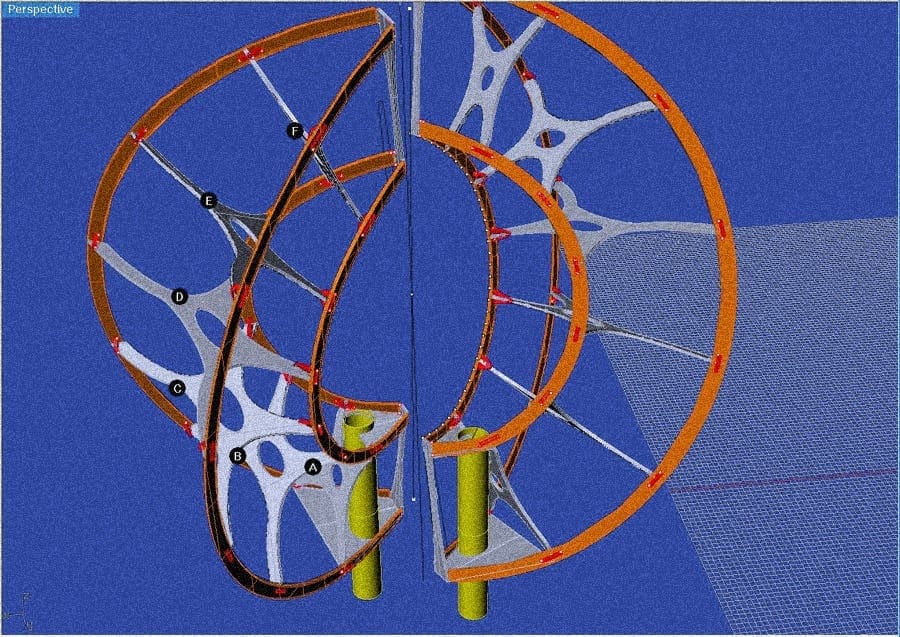


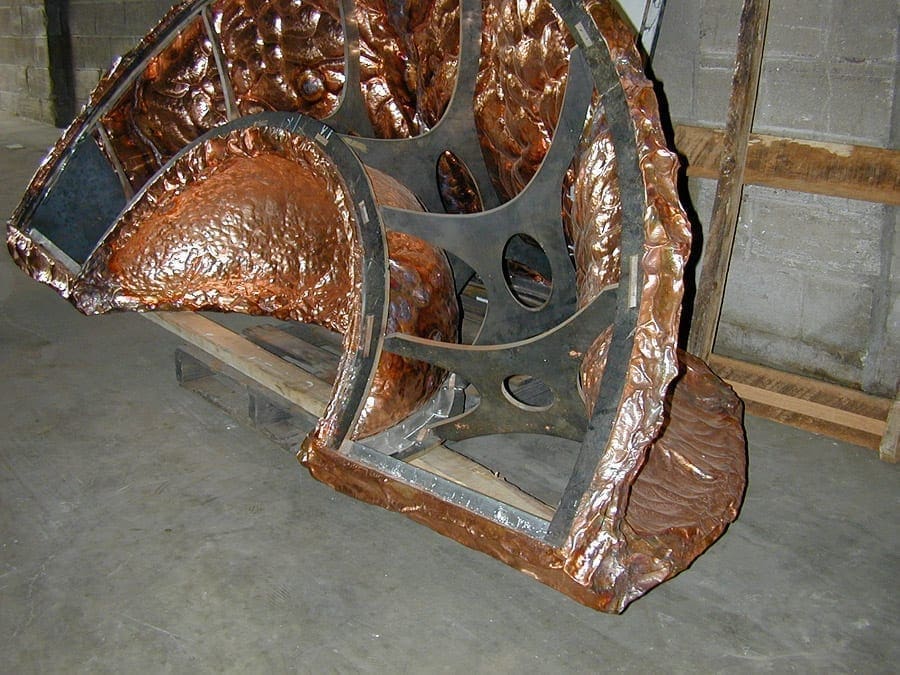
The cad rendering above shows the effect of copper hammered through the mild steel plate. The mild steel has perforations in the side which allow for sections of the copper to show through, see below.
The project used three metals: a aluminum for its structure, copper for its core, and carbon-steel. The back and the inner sections of the sculpture are finished with the Star Blue patina on hammered copper. The sides of the sculpture are finished with water jet cut mild steel, backed by a sheet of sealed red copper, also hammered. The effect is a highly detailed and sculptural piece, which is now in a private collection.
 Recent Projects